

-1.png?width=1080&height=725&name=Standalone%20Graphics%20(2)-1.png)
When an athlete is symptom-free and back on the field, it can feel like the job is done. But one last step matters just as much: making sure the documentation reflects the recovery.
Keeping injury records up to date ensures your reports stay accurate and everyone on staff is aligned. Here are a few quick ways to close the loop properly:
-
Add a Clearance Note:
- If a physician has cleared the athlete, make sure that clearance is formally documented.
- A Clearance Note creates a formal record of medical approval and ensures return-to-play decisions are properly authorized.
- Complete the RTP Step:
- Removes the athlete from “concussed” reporting
- Locks in a complete and accurate recovery timeline
- Confirms full protocol compliance
- Log a Status Change When Needed:
- Not every head injury leads to a concussion. If, within 24–48 hours of logging a suspected or diagnosed concussion, an athlete is determined not to have a concussion, record a Status Change Note to maintain accurate records and keep everyone aligned.
.png?width=1080&height=1080&name=Standalone%20Graphics%20(1).png) Once an RTP is complete, you can download a full RTP Summary PDF directly from the Athlete History tab.
Once an RTP is complete, you can download a full RTP Summary PDF directly from the Athlete History tab.
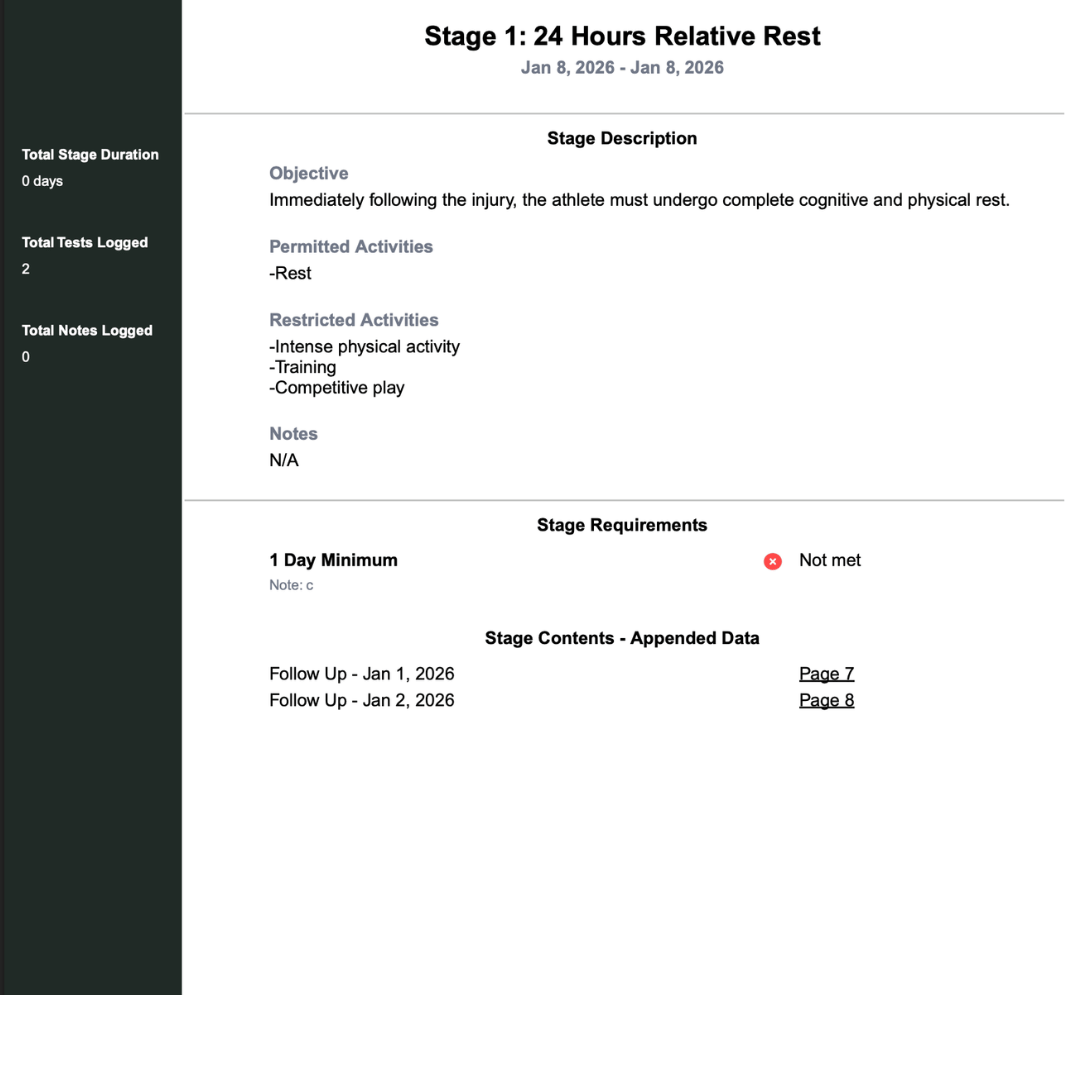 This summary gives you:
- Total RTP duration
- All tests completed during recovery
- All notes logged along the way
- Stage-by-stage activity guidelines
- Confirmation that every requirement was met
It’s a clean, comprehensive snapshot of the entire recovery process, ready for internal review, compliance needs, or record-keeping.
Staying proactive ensures your reporting remains accurate and your athletes are safely managed every step of the way.